Sorry, Carry On: Turning the Awkward Interruption Into Your Sketch's Best Gag
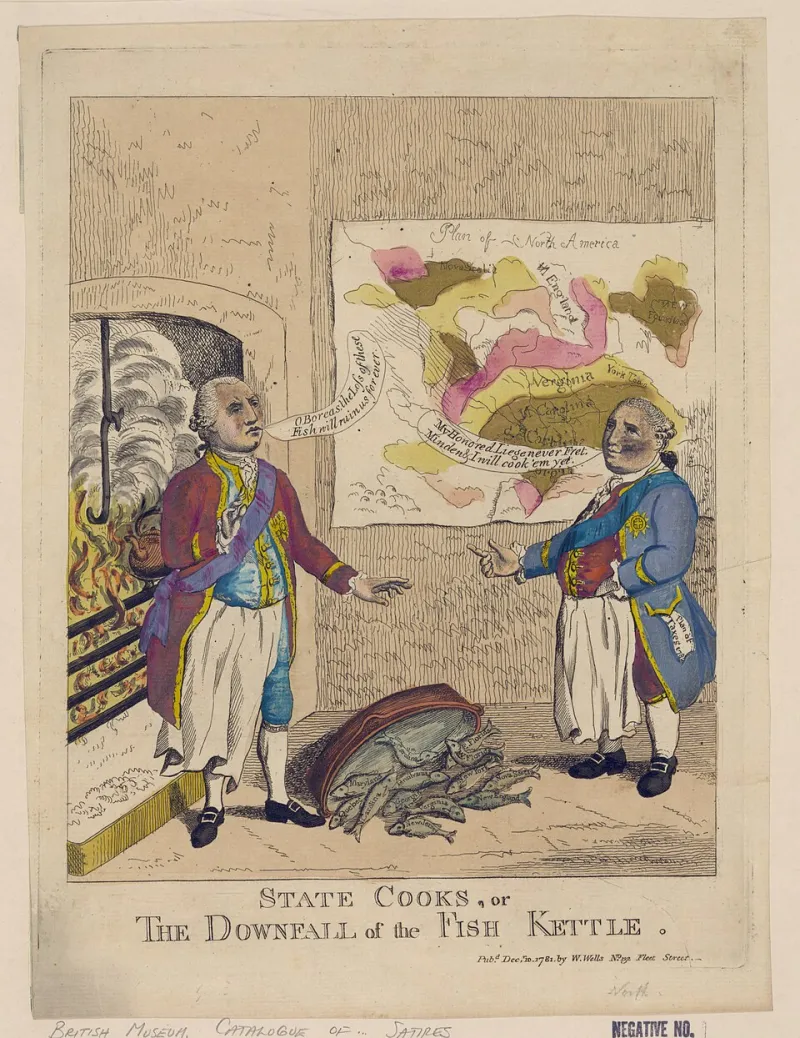
Photo: British Cartoon Prints Collection, Public domain, via Wikimedia Commons
There is a particular kind of British comedy that runs on interruption. Not the big, chaotic, door-slamming farce — though that has its place — but the small, domestic, deeply awkward kind. The kettle hits boiling point just as someone admits something unforgivable. The doorbell rings while a couple is mid-row. A neighbour pops their head round the door with a cheery "sorry to interrupt" and absolutely no intention of leaving. These moments feel local because they are local. They are the punctuation marks of British life, and in a sketch they can be funnier than any written punchline.
The trick is that an interruption is not automatically comic. A doorbell is just a doorbell until you decide where it falls, how loud it is, and what face the actor pulls when it goes off. Get those three things right and you have a gag. Get them wrong and you have a technical problem.
The Kettle Is a Character Actor
Start with the kettle. It is the cheapest co-star you will ever cast. It doesn't need a trailer, it doesn't ask for a close-up, and it will boil on cue for as many takes as you can afford. But a kettle that boils whenever it likes is just background noise. A kettle that boils on the exact syllable where someone says "I love you" is a joke.
In production terms, that means recording the kettle separately and placing it in the edit. Do not rely on the on-set boil. Boil a kettle in a quiet room with a decent mic, capture the click, the rumble and the final furious hiss, and then drop it into the scene like a percussion hit. The audience will not know why the moment feels sharpened, but they will feel it. The same goes for a microwave ping, a washing machine spin cycle or a phone buzzing on a table. These are not sound effects. They are beats.
The golden rule: one interruption per scene. If the kettle goes, then the doorbell goes, then the phone rings, you are no longer making a sketch. You are making a farce, and farce is a different animal with different rules and a much bigger budget for doors.
The Doorbell: When to Answer, When to Ignore
A doorbell is a power move. It changes who is in charge of the room. If your sketch is about a couple trying to have a serious conversation, the doorbell is an opportunity to strip them of their privacy and watch them scramble. If your sketch is about a man trying to assemble a flat-pack wardrobe, the doorbell is an opportunity to introduce a neighbour who will make everything worse.
But here is the thing: you do not always need to show the door. Sometimes the sound alone is funnier. A doorbell off-screen, followed by a long pause and a muttered "I'll get it," can do more work than a whole costume change. It lets the audience imagine the interruption, which is often better than the reality.
When you do stage it, keep the framing tight. The comedy is in the reaction, not the arrival. Hold on the face of the person who has just been interrupted. Let them decide whether to answer. That pause — the British pause, the one where someone weighs social obligation against personal dread — is where the laugh lives.
The Apology Entrance and the Art of Over-Excusing Yourself
There is a very specific British entrance: the person who arrives already apologising. "Sorry, sorry, just me. Sorry. Didn't mean to interrupt. I'll wait. No, you carry on. Sorry." This is a gift to a sketch because it does two things at once. It announces the character before they have said anything useful, and it undercuts whatever tension was in the room.
Use it sparingly. An over-apologetic entrance is a strong flavour. If every character enters apologising, the sketch becomes a study in politeness and nothing else. But if one character does it, and the other characters react to it with varying degrees of irritation, you have a dynamic. The apology becomes the joke, and the interruption becomes the engine.
Sound Design: Make It Read as Intentional
The difference between an interruption that lands and one that feels like a mistake is almost always in the mix. Record clean effects. Use foley where you can. Duck the music just before the interruption so the sound has room to arrive. And then — this is the important bit — do not cut on the noise. Cut after it.
If the doorbell rings and you cut immediately to the next shot, the audience reads it as a transition. If the doorbell rings and you hold for two seconds on the person who has just been interrupted, the audience reads it as a joke. The interruption needs a reaction. Without the reaction, it is just a sound. With the reaction, it is a beat.
Edit: The Cut That Lets the Joke Land
In the edit, resist the urge to tidy up. An interruption should feel like it has slightly derailed the scene, even if you have planned it down to the frame. That means keeping the messy bits: the half-finished sentence, the glance at the door, the sigh before the answer. These are the moments the audience recognises.
Use J-cuts and L-cuts to let the interruption bleed into the next shot. Let the kettle hiss carry over a cut. Let the doorbell ring under a line of dialogue rather than after it. The goal is not realism. The goal is rhythm. If the scene feels like it is being interrupted by real life, you have done your job.
When to Keep the Door Firmly Shut
Not every interruption is a gift. Some are just noise. The test is simple: does the interruption change the balance of power in the scene? If the answer is no, cut it. If the scene works exactly the same without the doorbell, the kettle or the apologetic neighbour, then you are not adding comedy. You are adding clutter.
The best interruptions are the ones the characters cannot ignore. They force a decision. They expose a weakness. They make someone say something they would not otherwise have said. That is the secret weapon. Not the sound itself, but what the sound makes people do.
So boil the kettle. Ring the bell. Let the neighbour in. But only if you know exactly what happens next. The interruption is not the joke. The interruption is the setup. The joke is the face someone pulls when they realise they have to deal with it.