Daylight Robbery: Filming a Sketch in Britain’s Winter Light
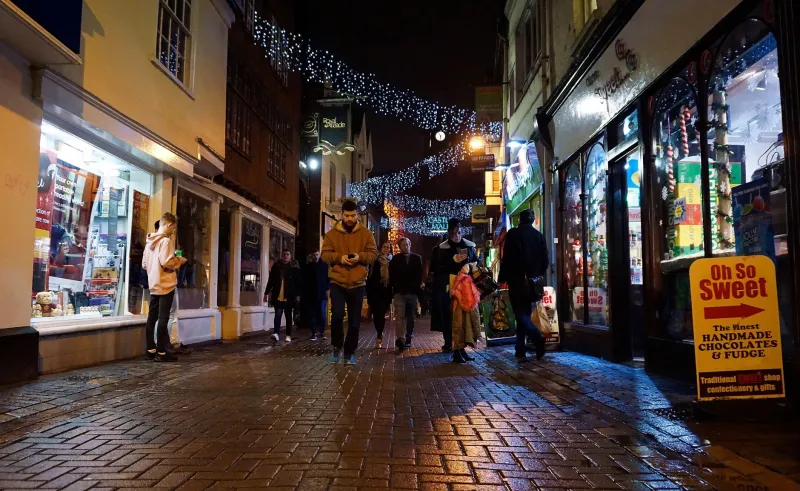
There is a particular moment in a British winter when the sky turns the colour of a wet dishcloth, the streetlights flicker on at half past three, and someone on set says, with genuine surprise, ‘Is it dark already?’ Yes. It is. It has been dark since lunch. Welcome to the four o’clock blackout, the annual production challenge nobody asked for and everybody has to solve.
Filming a sketch in the UK between November and February is not impossible. It is simply a scheduling puzzle wrapped in a weather warning and topped with a biscuit. The trick is to stop treating winter light as a betrayal and start treating it as a very short, very moody colleague who leaves early and refuses to answer emails after 4pm.
The sun is a freelancer with a tight schedule
First, accept the maths. In December, parts of Scotland get fewer than seven hours between sunrise and sunset; London manages around eight, and a decent chunk of that is the grey half-light that makes everyone look like they are in a crime drama about damp money. Golden hour is not late afternoon. It is somewhere around lunchtime, which is brilliant if you like shooting romance at 12:15 and deeply confusing if you had planned a picnic scene for 5pm.
So build the day around the light, not the script. Use a sun-tracking app, pick your location, and work out exactly when the useful light lands on the window, the wall, the bit of pavement where your actor is supposed to have a small nervous breakdown. Then schedule the shots that absolutely need daylight first. Not the fun shots. Not the shots with the best props. The ones that will look like a mistake if the sky is the colour of a filing cabinet.
Give yourself a reverse shot list: what must be shot before 11am, what can survive the soft gloom of 1pm, and what can be faked after dark. If a scene needs direct sun, shoot it first and shoot it fast. If it needs overcast, congratulations, you live in Britain, the weather is your unpaid crew member.
Cheat dusk like a cheap magician
Once the sun clocks off, you have options. The first is practical lighting, and lots of it. Shop windows are free softboxes. Cafés with warm bulbs, bookshops with lamps, pub windows glowing like a promise of chips: these are your friends. Ask nicely, buy a coffee, and shoot your actor walking past a window as if the entire street is lit by a professional gaffer with a fondness for tungsten.
Streetlights do a surprising amount of heavy lifting. Battery-powered LED panels can fill in faces without setting the local recycling bin on fire. A cheap set of fairy lights, a desk lamp and a piece of diffusion can turn a drab hallway into something that reads as ‘evening’ on camera. If you want to fake dusk, underexpose the sky slightly, keep the practicals warm, and resist the urge to make everything look like a car advert.
And remember the oldest trick in the book: shoot dusk for dawn. Or shoot night for night and stop apologising for it. Winter gives you darkness at a reasonable hour. Use it. A sketch set at 8pm no longer requires everyone to stay awake until 8pm.
Weather is not a problem; it is a character
British winter weather is often described as ‘grim’, which is unfair. It is atmospheric. Drizzle gives you wet pavements that reflect every light you own. Overcast skies give you soft, even illumination that flatters actors and hides the fact that your location is a car park behind a leisure centre. Fog is a gift. Actual fog, not the kind from a machine that smells faintly of toffee.
Lean into it. A character huddled under a broken umbrella is more interesting than a character standing in a perfectly lit park. A wet street looks expensive. A grey sky looks like a choice. The only thing that looks cheap is pretending it is June. If your sketch is set in summer and you are shooting in February, either rewrite it or accept that the audience will notice the breath vapour and the fact that everyone is wearing a coat indoors.
Keep the kit dry, keep the lens cloth handy, and keep a bin bag in your pocket. The bin bag is not glamorous, but neither is a dead camera.
The tea-break rule and other scheduling nonsense
Cold weather slows everyone down. Fingers stop working. Batteries drain faster than your enthusiasm for a 6am call. Build in warm-up breaks, bring a flask, and do not attempt a complex tracking shot at 3:40pm when the light is already packing its bags. The tea-break rule is simple: if the light is about to go, shoot the wide shot first, then the close-up, then the insert of the prop. Do not save the important bit for after the brew.
Have a blackout plan. Literally. A small notebook page that says: if we lose the light at 3:55, we shoot the interior scene, the reaction shot, or the bit where someone stares meaningfully at a kettle. A sketch can survive a reshuffled schedule. It cannot survive a producer crying into a tripod.
And if all else fails, make the darkness the joke. The four o’clock blackout is not a failure of planning; it is a production value waiting to happen. Put your actor under a streetlight, give them a torch, and let the British winter do what it does best: look slightly ominous and entirely free.
Sketchfilm’s advice? Check the sunset time before you check the script. The script can wait. The sun has already left.