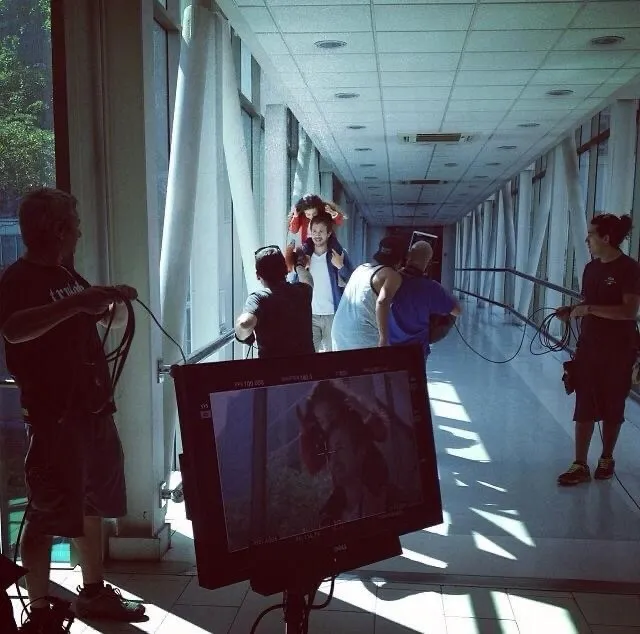
The Biscuit Treaty: Surviving the Social Choreography of a British Short Film Set
There is a moment on every British short film set when the temperature drops, the lead actor has gone quiet and someone says, with the strained cheerfulness of a vicar at a jumble sale, 'Anyone fancy a brew?' It is not a question. It is a constitutional crisis being solved in real time.
Shoestring shoots run on favours, goodwill and the kind of communal discipline that makes a church choir look anarchic. In 2026, with crews tighter and schedules madder than ever, the social choreography of a British set is not soft stuff. It is production infrastructure. Get it wrong and your shoot develops the atmosphere of a delayed train. Get it right and a tiny budget starts behaving like a slightly larger one.
The Kettle Is the Call Sheet
On paper, the call sheet tells you who is in charge. In practice, the first person to put the kettle on is making a political statement. Do it too early and you are the eager one who has not read the room. Do it too late and you are the reason the gaffer is staring at the wall like a disappointed spaniel.
The unwritten rule is simple: the brew round follows the chain of command, but it does not obey it. The producer may own the budget, the director may own the vision, but the person who knows where the mugs live owns the morning. That person is usually the runner, and that is why runners become legends.
A good runner does not just make tea. They remember that the sound recordist takes milk but no sugar, that the DOP goes weak with one, that the makeup artist has gone off caffeine and is now drinking herbal tea with the haunted expression of someone who has made a terrible life choice. They learn it once, they remember it all day, and they never make a thing of it. That is not service. That is diplomacy.
The Runner Who Became a Legend
Every crew has a story about a runner who saved the day with nothing more than a clipboard and an unreasonable knowledge of local bakeries. My favourite involves a shoot in a village hall where the heating had given up and the only nearby shop was a post office that also sold fishing tackle. The runner produced a flask, a packet of Rich Teas and a roll of gaffer tape in the first twenty minutes. By lunch, they had negotiated access to the church kitchen, fixed a wobbly boom stand with a tea towel and somehow got the vicar to appear as an extra. They were not credited as a producer, but they were absolutely producing.
That is the thing about set manners. They are not decorative. A runner who feels respected will spot the loose cable before it becomes a trip hazard. A runner who feels invisible will spot the exit.
The Diplomatic Art of One More Take
Then there is the sentence that has ended more friendships than a lost lens cap: 'Just one more take.'
It sounds small. It is not. It is a request for time, patience and emotional labour from a crew that has already given you all three. The amateur says it every fifteen minutes. The professional says it once, and says it well.
The protocol is roughly this. First, ask the person who will actually have to do the work. Not the director, not the client, not the actor's agent who is somehow on speakerphone from a car park in Surrey. The focus puller. The boom op. The person holding the reflector in a wind that is doing its best to turn them into a kite. If they say yes, you say thank you. If they say no, you do not sulk. You say, 'Understood. Let us look at what we have got.' That sentence is worth more than a second camera.
In 2026, the 'one more take' conversation has become even more delicate because everyone is doing three jobs and half the crew are on their fourth favour of the month. Good manners are the only overtime budget that never runs out.
Biscuits, Boom Poles and the Sacred Wrap
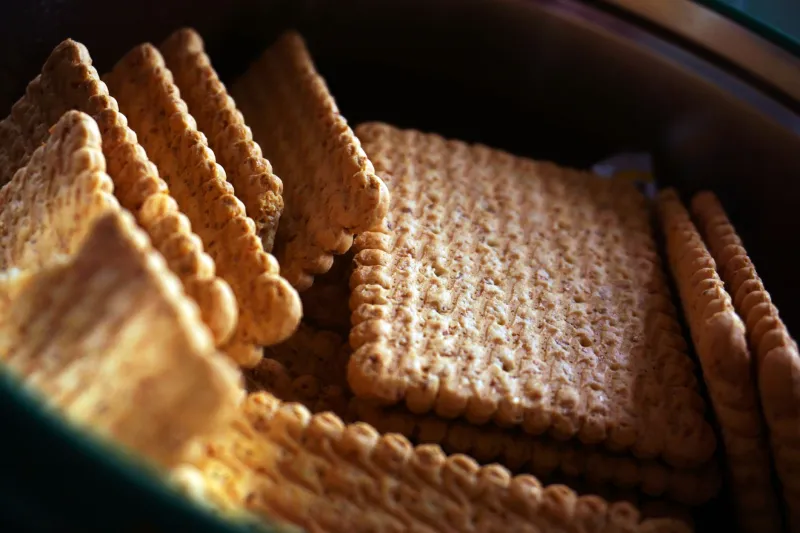
Every set has its sacred rituals. In Britain, the biscuit tin is the most important. It is not a snack. It is a treaty. The correct hierarchy is usually: chocolate digestives for the morning, something plain for the afternoon when everyone is pretending not to be tired, and a lone pack of custard creams at the bottom that nobody touches because it is tradition.
Then there is the sacred wrap. No, not the sandwich. The moment at the end of the day when the director says, 'That is a wrap,' and everyone claps in a way that suggests they have not seen their families in weeks. The unwritten rule of the wrap is that you do not start packing up before it is said. Not one sandbag. Not one cable. Not even a lingering look at the van. The director may be three takes from a nervous breakdown, but the wrap is a shared moment. It belongs to everyone.
And then there is the boom in shot. The moment everyone pretends not to notice. The boom operator sees it. The DOP sees it. The editor will see it in post and make a noise like a kettle boiling. But in the moment, nobody says anything, because the take is going well and the actor is doing something interesting with their eyebrows. You note it. You move on. You fix it in the next setup. That is not negligence. That is collective tact.
Why Manners Are a Line Item
A tiny budget is not just a number. It is a series of small negotiations. Can we borrow a lamp? Can we shoot in your pub for two hours? Can we park the van in your forecourt without buying anything? The answer to all three is usually yes if the person asking has been pleasant, organised and has not tracked mud through the function room.
Good set manners stretch the budget because they buy you time, goodwill and the benefit of the doubt. They turn a location owner into an ally. They turn a favour into a future favour. They turn a runner into a producer. They turn a scrappy sketch shoot into the kind of set where people say yes before you have finished the sentence.
So make the brew. Learn the order. Thank the person holding the boom. Do not touch the custard creams. And when someone says 'one more take,' make sure it is one more take, not one more hour. That is the unwritten rule. It is also the only one that matters.