From Group Chat to Front Row: Putting Your Sketch Where People Actually Are in 2026
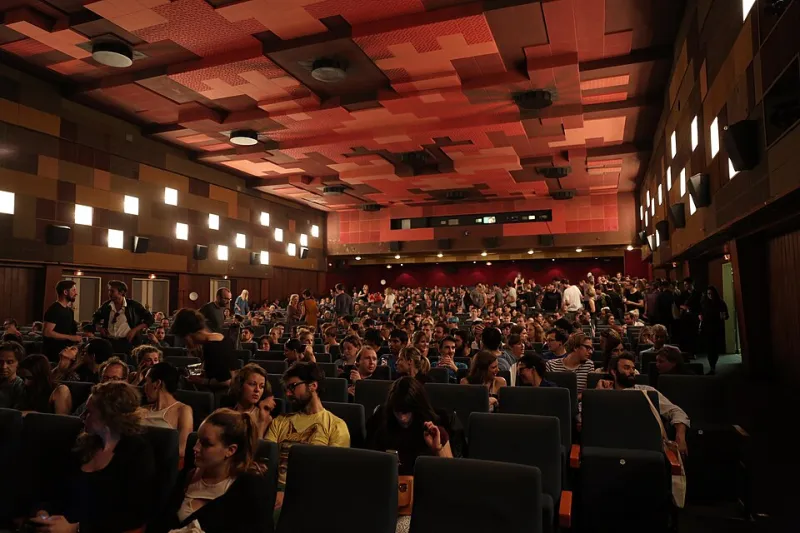
Photo: Manfred Werner - Tsui, CC BY-SA 3.0, via Wikimedia Commons
Every sketch maker knows the ritual. You finish the edit, export a version that is slightly too large for WhatsApp, and send it into the group chat with the words “new thing, feedback welcome”. Someone replies with a fire emoji. Someone else asks if the audio is meant to be like that. Then the link sinks beneath a dentist appointment and a photo of someone’s new kitchen.
In 2026, that is not a release strategy. It is a broadcast to people who already like you, delivered in the same place they ignore their cousin’s wedding photos. The sketch itself might be excellent — sharp, funny, beautifully timed — but excellence needs a room, a date and a reason for people to turn up. A sketch should be treated as a small event, not just another link in a chat.
Start with the room, not the algorithm
The algorithm is a strange landlord. It changes the locks, raises the rent and never tells you why. Chasing it exclusively is exhausting. The healthier approach is to start with the room: who would actually enjoy this sketch, and where do those people already gather? A comedy night in Leeds. A community cinema in Bristol. A short-film screening in a converted church in Glasgow. A festival tent in Edinburgh where the audience is already warm, curious and holding a drink.
The room does not have to be glamorous. It has to be real. A twenty-person screening above a pub can do more for a sketch than a thousand passive views, because twenty people who laugh in the same room become twenty people who tell someone else. And unlike a view, a laugh is difficult to fake.
The local screening circuit
The UK has a stubborn, brilliant network of small screenings and short-form nights. Some are run by film societies, some by comedy promoters, some by someone called Dave who has a projector and a strong opinion about aspect ratios. Look for local film festivals, independent cinemas, arts centres and community venues that programme short work. Many run open-call slots or “shorts before the feature” strands. The key is to pitch early, read the submission guidelines properly, and do not send a twelve-minute sketch to a night dedicated to ninety-second micro-shorts unless you enjoy rejection with a side of embarrassment.
Comedy festivals and short-form nights
The festival circuit is not only for stand-up. Brighton Fringe, Leicester Comedy Festival, Edinburgh Fringe and a host of smaller regional events have hosted sketch acts and short comedy screenings for years. Some offer scratch nights, new material slots or film strands. The advantage is context: audiences arrive expecting to laugh, and programmers are often looking for something that breaks the usual pattern. The disadvantage is competition and cost, especially in Edinburgh, where a venue may charge you more than your entire production budget for the privilege of a folding chair.
A smarter move is often to partner with an existing night rather than invent your own. Offer your sketch as part of a mixed bill. Bring a Q&A. Bring a poster. Bring the actor who can do the funny voice live for thirty seconds. Make it easy for the promoter to say yes.
Community cinemas and rented rooms
Community cinemas, village halls and arts centres are quietly hungry for short films. They often have loyal audiences, decent projection and a bar. Renting a room for a one-off “sketch night” can be surprisingly affordable, especially if you split the cost with other filmmakers. The trick is to programme with generosity: show your sketch, but also show work by people who are not you. A mixed bill gives the audience more reasons to come and makes the evening feel like a scene rather than a vanity screening.
Broadcaster and talent-scheme windows
Broadcasters and funding bodies still run talent schemes, development programmes and short-form opportunities. The details change, so check current windows rather than relying on a blog post from the distant past. But the principle is stable: these schemes want to see that you can make something with a clear voice and a bit of craft. A sketch with a strong script, clean sound and a release history — even a small one — looks more serious than a link with no context. If you have screened at a local festival or played to a full room above a pub, say so. It shows momentum.
Vertical platforms, but with a plan
TikTok, Instagram Reels and YouTube Shorts are not the enemy. They are simply not a plan on their own. Use them deliberately. Cut a vertical version if the sketch allows it, but do not simply crop the wide shot and hope. Post with a hook in the first second. Pin a comment that links to the full version. Treat the vertical edit as a trailer for the sketch, not the sketch’s entire life.
A release plan you can actually run
Here is a simple sequence that works for a low-budget sketch in 2026.
- Set a date. A sketch with a screening date has a deadline. A sketch without one has a vibe.
- Submit to two or three local opportunities. Festivals, short-film nights, community cinema strands. Read the rules. Meet the deadline.
- Plan a small live event. A pub room, an arts centre, a friend’s screening night. Invite other filmmakers. Make it a bill, not a broadcast.
- Prepare the online release. Vertical trailer, full version, a clean thumbnail, a short description that actually describes the joke.
- Follow up. Thank the programmers. Post the photos. Send the link to the people who laughed. Keep the room warm.
A sketch is not just a file. It is a tiny piece of cinema with a beginning, a middle and an audience. In 2026, the most radical thing you can do is give it a front row.