The Gaffer's Night Off: Why the Ugliest Shot in Your Sketch Is Often the Sharpest
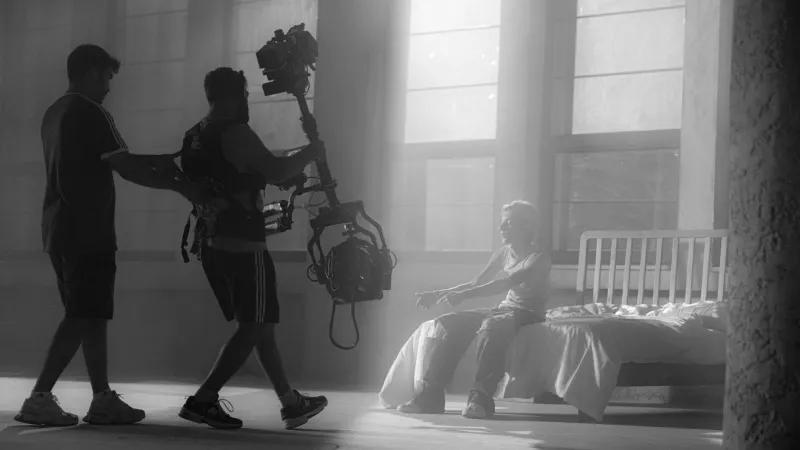
I have seen sketches this year that were lit like a car commercial. Soft key, hazy backlight, a colour grade the shade of a wellness retreat, and somewhere in the middle of it all a man in a hedge doing an impression of his father-in-law. The joke was fine. It was also being smothered under seven layers of kindness.
This is not a new complaint, but in 2026 it has become an epidemic. The tools have got cheaper and the tutorials have got better, and somewhere along the way British sketch makers decided that every gag needed the production values of a supermarket Christmas advert. It doesn't. In fact, a lot of the time, the polish is the enemy.
The softbox didn't ask to be here
Nobody is suggesting that sketches should look like a hostage video. But there is a particular kind of over-lit, over-graded, shallow-focus look that has colonised comedy online, and it does a specific disservice to the material: it makes everything feel rehearsed. A sketch is meant to feel like an accident. When the light is that flattering and the frame is that considered, the audience stops feeling like a witness and starts feeling like a customer.
What the polish quietly kills
Six things, off the top of my head.
The surprise. A beautiful shot announces itself. The eye lingers, admires, and forgets to be ambushed by the line.
The amateur status. Sketch comedy has always drawn power from the sense that normal people have wandered in front of a camera. Over-produce it and you lose the amateur's greatest asset: the suspicion that anything could happen.
The room. Wide, flat, dead-static shots tell you where you are and what the stakes are. Tight, moody coverage tells you the director has been watching a lot of thrillers.
The pace. Ugly shots tend to be short shots. Pretty shots sit there, preening.
The cringe. Comedy of embarrassment needs witnesses, not cinematography. You want the audience to feel awkward, not impressed.
The joke itself. If the grade is doing the work, the writing is not.
The dead-static wide and other comic instruments
The most reliable comedy shot in the British canon is the locked-off wide in a room with a laminate floor and a suspiciously low ceiling. It says: this is real, this is happening, and nobody involved is getting out. The Office understood this. Peep Show understood this. Every great sketch show from The Day Today to The League of Gentlemen has used visual roughness as a comic instrument rather than an apology.
Then there's the crash zoom — the sudden, rude lunge towards a face that has said something unforgivable. It is cheap, it is silly, and it works because it is cheap and silly. And there is the humble odd lamp: the standard lamp in the corner that shouldn't be there, the strip light that hums like a trapped wasp, the sodium-orange glow of a municipal car park that flatters nobody and yet makes everything funnier.
Municipal lighting is a national treasure, and we treat it like a problem. The blue-white of a leisure centre corridor. The orange of a streetlamp through blinds. The green-tinged horror of a hospital waiting area. These are not obstacles to be filtered out. They are free punchlines.
What an ugly shot actually says
There's a semiotics to it. Polished looks like advertising. Rough looks like evidence. When you shoot a sketch with a bit of grit, you are telling the audience that this is a found thing, that it happened somewhere real, to people who are not being paid to be charming. That is the register British comedy has always done best.
When ugly is actually lazy
Here is the necessary caveat, because if I don't say it someone will. Deliberately ugly is not the same as accidentally bad. If the sound is unusable, the eyeline is wrong and the scene is lit by one sad bulb because nobody remembered to bring a second one, that's not a style — that's a skip fire.
The distinction is intent. A crash zoom that lands on the punchline is composition. A crash zoom because the operator tripped is chaos. Both can be funny, but only one is repeatable, and if you're making a sketch series you need to know which you're doing.
A rough guide to shooting badly on purpose
Pick one ugly rule per scene and stick to it: one wide, one lamp, one zoom, one bad decision.
Protect the gag above all. Roughness should frame the joke, not obscure it.
Keep the camera still, then move it violently. Nothing in between.
Light with what's in the room. The overhead, the desk lamp, the light from the telly. Let the shadows do the acting.
Resist the grade. If you can see the LUT, it's too strong.
And never, ever use slow motion on a punchline unless the slow motion is the joke. Sketchfilm has made that mistake for you. You're welcome.