Manners, Mirth and the M6: Building Regional Characters That Aren’t Just a Voice
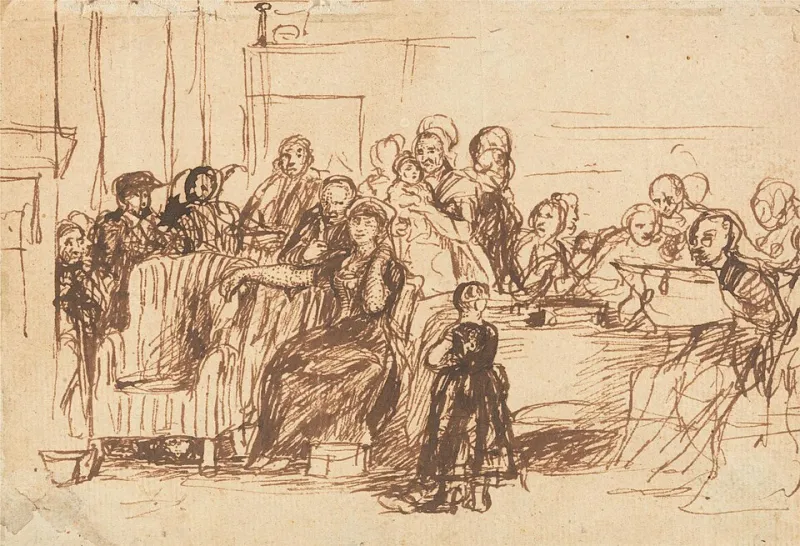
Photo: David Wilkie, CC0, via Wikimedia Commons
Somewhere in Britain, a sketch is being workshopped in which a character enters, says 'eh up' or 'alright me babber', and the room laughs before anyone has established who they are, what they want, or why they have brought a hedge strimmer into a dental surgery. The accent has arrived before the person. It is doing all the work. And, frankly, it is being paid too much.
That is the trap. Regional accents are not jokes. They are not punchlines, character traits, or shortcuts to warmth. They are texture: the grain in the voice, the weather in the vowels. When a sketch treats an accent as the gag, it flattens everyone involved — the character, the performer, and the audience, who are perfectly capable of laughing at something more specific than a vowel shift.
The accent is a coat, not the person
Think of accent as costume. A good costume tells you something about the character before they speak, but it cannot replace the script. If your character's only defining feature is that they sound like they are from a particular region, you have written a coat rack with a funny hat.
The fix is not to avoid regional voices. It is to earn them. Give the character a want that has nothing to do with where they are from. A Bolton mum who is quietly furious about the school raffle. A Belfast man trying to return a haunted toaster. A Cardiff teenager attempting to explain to a call centre why their broadband router has become emotionally dependent on the fridge. The accent colours those wants; it does not replace them.
Start with a want, not a vowel
Before you write a line of dialogue, answer three questions: What does this person want in the scene? What are they prepared to do to get it? What will they not admit? None of those answers should be 'be from Yorkshire'.
A practical exercise: write the scene with no accent markers at all. No dropped gs, no local slang, no phonetic spelling. Just the character's objective and their tactics. If the scene collapses without the accent, the accent was the load-bearing joke. If it still stands, you have a character. Now add the accent back as seasoning, not scaffolding.
Rhythm is regional; punchline isn't
Accents come with rhythms — sentence length, pace, the way people interrupt or leave a beat before answering. Those rhythms are gold for comedy. A character who takes a long pause before saying something devastating can be funnier than any catchphrase. But the rhythm should serve the character's mind, not just signal their postcode.
Listen to how people actually speak in the place you are writing about. Not just the vowel sounds; the politeness strategies, the deflections, the way someone says 'right' when they mean 'absolutely not'. Specificity is affectionate. Stereotype is lazy. There is a difference between a character who says 'that's grand' because they are managing discomfort and a character who says it because the writer needed a regional flavour button.
Contradictions do the heavy lifting
The funniest regional characters are not consistent. They are contradictory in ways that feel true. A no-nonsense farmer who cries at adverts for insurance. A softly spoken Cornish shopkeeper with a ruthless sideline in blackmail. A Scouse uncle who claims to hate drama and yet has a spreadsheet of family feuds with colour-coding.
Contradiction is where the accent becomes texture rather than gag. The voice tells us where they are from; the contradiction tells us who they are. Audiences laugh at the gap between expectation and behaviour, not at the expectation itself.
Casting and rehearsal notes
Cast regional actors when you can. Not because non-regional actors cannot do accents, but because lived geography brings a thousand tiny choices you cannot workshop in an afternoon. If you are casting, do not ask for 'a funny accent'. Ask for the character. The accent should be part of the performance, not a party trick.
In rehearsal, run the scene once with the accent dialled down. Then once with it dialled up. Find the middle. If the actor is thinking about the voice, they are not thinking about the want. Give them permission to be specific without being a caricature. A dialect coach can help; so can a note like 'less performance of the accent, more performance of the person'.
The affection test
Before you shoot, read the script as if you were from the place you are writing about. Would you recognise yourself? Would you feel laughed with or laughed at? The affection test is not about being nice. It is about being accurate enough to be kind. Sketch comedy can be sharp, rude, and silly. It should not be smug about someone's home.
If the only thing the audience remembers is the voice, you have made a radio jingle, not a character. If they remember the person — the raffle fury, the haunted toaster, the spreadsheet of feuds — then the accent has done its job. It has become texture. And the joke, thank goodness, is somewhere else.
A short checklist for the edit
- Cut the first accent gag. If the scene still works, you never needed it.
- Check every local reference. Is it characterful or just a tourism leaflet?
- Read the dialogue aloud without the accent. Does the want still land?
- Ask a regional actor or consultant for a sanity check, not a seal of approval.
- Make sure the character could exist in a different region and still be funny. If not, you have written a stereotype with a satnav.
Sketchfilm exists for short films, sharp sketches and stories worth screening. Regional voices belong in that mix — as people, not as punchlines. Give them a want, a rhythm, a contradiction, and a decent coat. The accent will look after itself.